
Choosing the wrong tool to fell a tree can lead to serious injury or property damage. As a professional arbourist, I know it’s not just about cutting wood but doing so safely and efficiently.
The best tool depends entirely on the tree’s size, species, location, and skill level. There is no single "best" option, only the right system of tools for the specific job.
The Primary Cutting Tools: A Professional Breakdown
Your main cutting instrument is the heart of the operation. Choosing between a petrol-powered machine and a manual tool is the first major decision you will make.
The Chainsaw: The Professional Standard
For trees with a diameter over 15-20cm, a chainsaw is the industry standard due to its speed and power. However, operating one requires specialized training and respect for the equipment.
- Petrol Chainsaws: The professional's choice for maximum power, ideal for felling large, mature trees anywhere.
- Battery/Electric Chainsaws: Quiet and fume-free, these are perfect for smaller residential garden jobs but not suited for substantial felling.
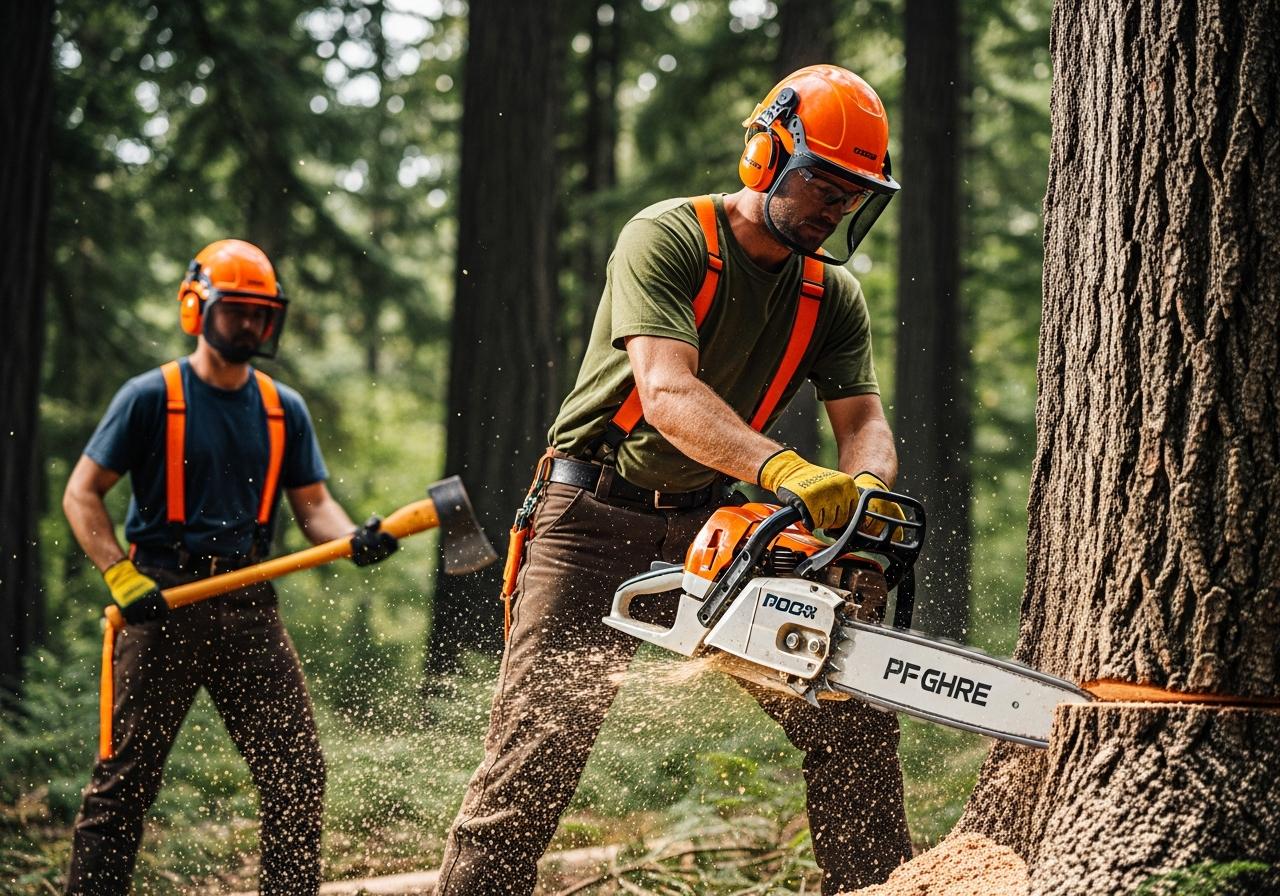
A chainsaw must always be used with full Personal Protective Equipment (PPE), including a helmet, visor, ear protection, chainsaw trousers, and steel-toed boots.
The Felling Axe: The Traditional Tool
A sharp felling axe is a formidable tool for smaller trees under 20cm or clearing smallholdings. In skilled hands, it remains an effective, traditional choice for managing firewood and light tasks.
However, axes are labor-intensive and require significant precision to ensure a safe fall. Most homeowners find them better suited for processing wood on the ground rather than felling large trees.
The Handsaw: For Pruning, Not Felling
Let's be clear in the chainsaw vs handsaw debate: a handsaw is not a felling tool for trees. Bow saws and pruning saws are designed for removing small branches or cutting through saplings. Attempting to cut down even a medium-sized tree with a handsaw is exhausting, time-consuming, and highly dangerous. As you fatigue, your cuts become less precise, increasing the risk of the tree falling in an unintended direction.
Beyond the Cut: Essential Support Equipment
Safe tree felling requires more than just a cutting tool; you need a system to control the fall and manage the site afterward. Professional-grade support gear ensures the job is predictable, and the property remains protected.
- Felling Wedges: Vital for preventing the chainsaw bar from pinching and helping guide the tree's direction.
- Rigging Ropes & Pulleys: Advanced systems used to secure and lower branches in tight spaces near structures.
- Stump Grinders: Heavy machinery that turns remaining stumps into wood chips to prevent pests and tripping hazards.
The Verdict: When to DIY and When to Call a Professional
The best tool for the job depends entirely on the size of the tree and its proximity to your property:
- Handsaws: Perfect for trimming branches or small saplings no thicker than a wrist.
- Axes or Small Chainsaws: Suitable for small trees in open areas, provided you have proper safety gear.
- Professional Chainsaws: Essential for any tree over 25cm in diameter or those located near structures.
Often, the "best tool" is the phone. Knowing when a task exceeds your skill level is the most important safety decision you can make. At Power Tree Fellers, we combine professional-grade equipment with the experience to use it safely.
Trust the Pros for Your Next Project
Don’t risk your property or your safety with a DIY job that’s better left to the experts. Whether you have a hazardous branch overhanging your roof or a large tree that needs professional felling, we have the right gear and the experience to handle it safely.
For a safe, efficient, and clean tree removal, contact the Power Tree Fellers team today for an expert assessment and a no-obligation quote. Let us do the heavy lifting so you can enjoy a clear, safe garden.
FAQs
Can I cut down a tree with a handsaw?
You should only use a handsaw for very small saplings or for pruning branches. Attempting to fell a mature tree with a handsaw is extremely dangerous and inefficient, as fatigue leads to poor control over the tree's fall.
What is the most important piece of safety gear for tree felling?
While all PPE is important, a high-quality helmet with an integrated face shield and ear protection is non-negotiable when using a chainsaw. It protects you from head injuries, flying debris, and hearing damage.
Do I need a permit to cut down a tree in South Africa?
It depends on the tree's species and location. Certain indigenous trees are protected by law, and you may need a permit from the local municipality or the Department of Forestry, Fisheries and the Environment. It is always best to check with your local authority before cutting.
Is it cheaper to cut down a tree myself?
It might seem cheaper initially, but the costs of buying or hiring the correct equipment (chainsaw, PPE, wedges) can add up. More importantly, the financial risk associated with potential damage to your home, a vehicle, or a neighbour's property far outweighs the cost of hiring a professional, insured service.
What size chainsaw do I need for a large tree?
Professionals use chainsaws with long guide bars (50cm or more) for large trees. However, operating a large, powerful chainsaw requires extensive training and physical strength. For a homeowner, using a saw that is too large for their skill level is a common cause of serious accidents.