
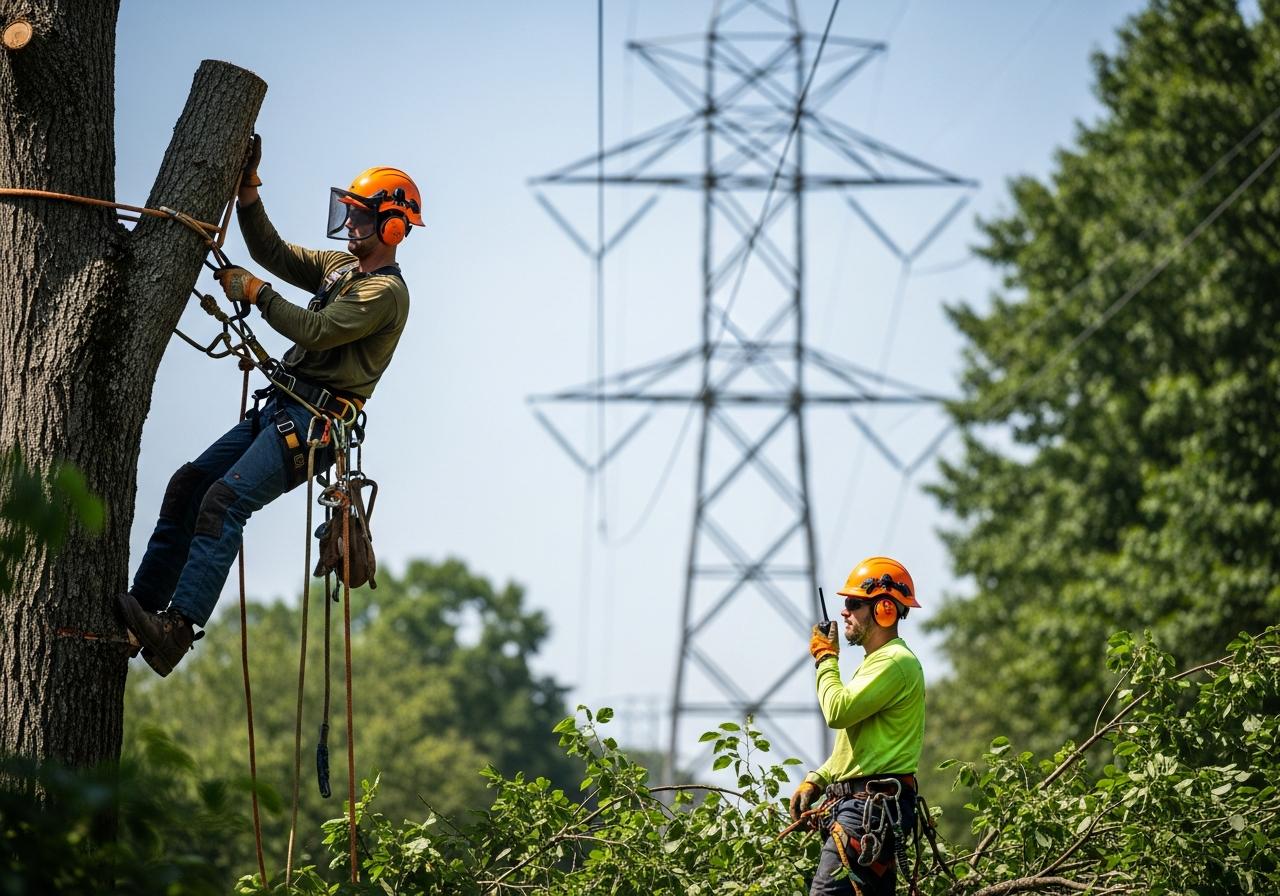
Felling a tree near power lines is catastrophic if mishandled, often turning DIY projects into deadly emergencies involving outages or severe injury. Because electricity is unforgiving and falling trees are unpredictable, there is absolutely no margin for error.
This guide aims to highlight these immense risks rather than build your DIY confidence. The goal is to help you make the only safe decision: calling a qualified professional.
The Lethal Reality: Why Power Lines and Trees Don't Mix
You don’t need to touch a high-voltage line to be harmed; electricity can arc through the air to ladders, wet branches, or your body. In South Africa, the risk is higher as contact can surge through the entire neighborhood.
The danger lies in the invisible energy field surrounding every power line. A single branch touching a wire can instantly energize the tree, the ground, and anyone nearby.
The Eskom Factor: Understanding Servitude Regulations
Many property owners are unaware that Eskom or local municipalities hold a legal "servitude" over their land to protect electrical infrastructure. This legal right of way allows them access to maintain and clear any vegetation threatening power lines.
What this means for you:
- Access Rights: Eskom can enter your property to trim or remove hazardous trees.
- Clearance Standards: Specific minimum distances must be maintained between trees and lines.
- Legal Risks: Working in a servitude without authorization leads to heavy legal and financial penalties.
Power Tree Fellers navigates these regulations daily, handling all necessary communication and compliance on your behalf.
Our Pre-Felling Safety Protocol: A Non-Negotiable Checklist
Our non-negotiable safety protocol ensures every cut protects our team, your property, and the public. Before any work begins, we follow a rigorous process to manage the high-risk nature of felling near electrical infrastructure:
- Site Assessment: We evaluate tree health, lean, line voltage, and drop zones to inform every decision.
- Strategic Planning: We coordinate with local authorities to arrange emergency power shutdowns when necessary.
- Specialized Equipment: We utilize non-conductive fiberglass tools, advanced rigging, and electrical-rated PPE.
The Execution: Advanced Techniques for High-Risk Felling
Cutting at the base and hoping for the best is out of the question; in high-risk zones, trees must be dismantled piece by piece from the top down. Specialized rigging with high-strength ropes and blocks is essential for this process.
This technique allows climbers to securely attach to sections and lower them to the ground in a controlled manner. For larger trees, we use aerial lifts to provide a stable, insulated platform for our arborists.
When to Call the Professionals (And Why You Must)
Being within three metres of a power line puts you in a high-risk zone where the threat of electrocution from arcing is extreme. Never attempt DIY trimming in these areas; the risk to your life far outweighs any potential savings.
Professional help is required if:
- Encroachment: Branches are growing directly into or over power lines.
- Leaning: A tree is leaning significantly toward electrical infrastructure.
- Storm Damage: Broken limbs are hanging near or on wires.
Power Tree Fellers provides the certified expertise and insurance needed to manage these hazards safely. We ensure every job is fully compliant with South African safety regulations.
Prioritise Safety: Get a Professional Tree Felling Assessment
Your safety and the integrity of your property are not worth the risk. For any tree presenting a hazard to power lines, put down the tools and pick up the phone. Our certified team at Power Tree Fellers provides the professional, safe, and fully compliant assessments you need to protect your home and community.
Don't wait for a storm to turn a hazard into a catastrophe. Contact us today for a free quote and ensure your property remains within South African safety regulations.
FAQs
How close can you legally cut a tree to a power line in South Africa?
There is no "safe" distance for an untrained individual. Professionals adhere to strict minimum approach distances set by utility providers like Eskom, which is typically no less than 3 metres, and often more for high-voltage lines. Legally, any work within this zone must be done by a qualified utility arborist.
Can Eskom cut trees on my property?
Yes. If trees on your property are interfering with or endangering their equipment within the registered servitude, Eskom has the legal right to trim or remove them to ensure the reliability and safety of the power supply.
What makes tree felling tools non-conductive?
Non-conductive tools are made from materials that resist the flow of electricity, most commonly fibreglass. This includes items like pruning poles and handles on certain hand tools. Using these tools provides a critical layer of protection against accidental contact with an energised line.
Do I need to arrange an emergency power shutdown myself?
No, you should not. A professional tree felling company will handle all communication and coordination with the utility provider. We have established protocols for requesting a planned power outage to ensure the work is done with the lines de-energised, which is the safest possible condition.
What is the biggest mistake homeowners make with trees near power lines?
The most common and dangerous mistake is procrastination. Homeowners often watch a tree grow closer and closer to the lines, hoping it won't become a problem. This delay only makes the situation more hazardous and the eventual removal more complex and expensive. Early assessment and proactive maintenance are always the best approach.